What is Access Write in SAP C4C? Understanding Access Right False Errors
Understanding Access Write in SAP C4C, common Access Right False errors, extension BO limitations, and recommended development approaches.
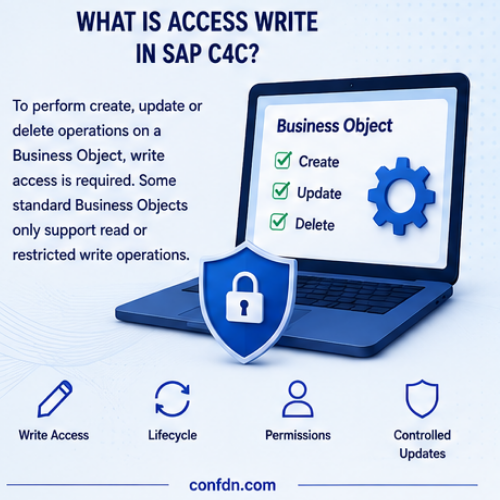
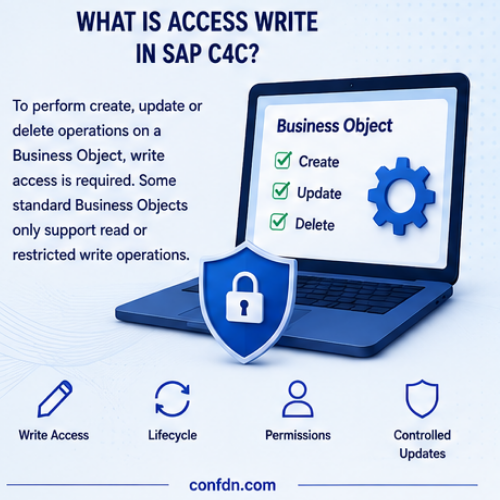
What is Access Write in SAP C4C?
One of the most misunderstood topics in SAP C4C development is the concept of Access Write permissions. During custom development, developers frequently encounter the well-known:
“Access Right False”
error.
In many cases, this issue is mistakenly interpreted as an authorization problem, while the actual root cause is often related to framework behavior, lifecycle restrictions, or transaction limitations within SAP C4C.
What Does Access Write Mean?
For a Business Object (BO) to support:
- Create
- Update
- Delete
operations, the object must allow write access within the current runtime context.
However, SAP C4C does not permit write operations in every lifecycle stage. Even if an object is technically accessible, certain framework contexts may still block modification attempts.
What Does “Access Right False” Mean?
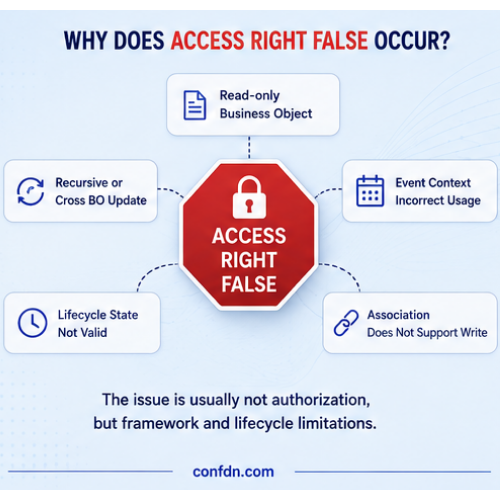
This error typically indicates that the current runtime context does not support write operations for the targeted object.
In most scenarios, the issue is not caused by missing user authorizations, but rather by:
- Framework restrictions
- Transaction boundaries
- Lifecycle limitations
- Cross-object update rules
Understanding this distinction is critical when troubleshooting complex C4C customizations.
Common Scenarios Where This Error Occurs
Developers commonly face this issue in situations such as:
- Updating another Business Object inside a standard BO event
- Performing external write operations inside
BeforeSave - Updating nested child nodes
- Triggering writes through association chains
- Executing recursive update logic during save events
- Modifying related objects during approval or status transitions
Especially within events like BeforeSave and AfterModify, transaction handling must be carefully designed.
Why Does SAP C4C Restrict These Operations?
SAP C4C intentionally restricts certain write operations to preserve transaction consistency and runtime stability.
The framework is designed to prevent:
- Deadlocks
- Recursive save loops
- Transaction inconsistencies
- Uncontrolled cross-object modifications
As a result, some operations that appear technically valid may still be rejected at runtime.
Recommended Approach
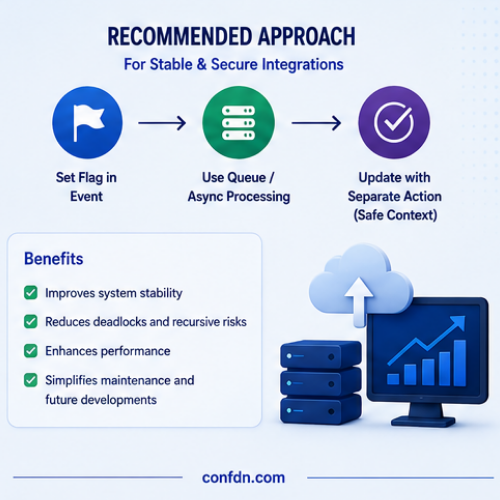
Instead of performing direct synchronous updates, SAP best practices generally recommend:
- Queue-based processing
- Asynchronous operations
- Scheduled background jobs
- Intermediate custom BO structures
- Event decoupling strategies
These approaches significantly improve scalability, maintainability, and overall system stability in enterprise-level implementations.
Best Practice Recommendations
- Minimize cross-object write operations
- Avoid heavy processing inside
BeforeSave - Keep lifecycle events lightweight
- Design around transaction boundaries
- Prevent recursive update chains
- Prefer asynchronous architectures whenever possible
Conclusion
In SAP C4C, “Access Right False” errors are usually not authorization issues.
In most cases, they are caused by framework behavior, lifecycle management, and transaction handling limitations within the SAP C4C runtime environment.
A solid understanding of these architectural constraints is essential for building stable and sustainable C4C solutions.