SAP C4C 2605: What's New?
A review of SAP C4C 2605 release updates, their impact on technical teams, integration risks, and post-upgrade considerations.
SAP C4C 2605: What's New?
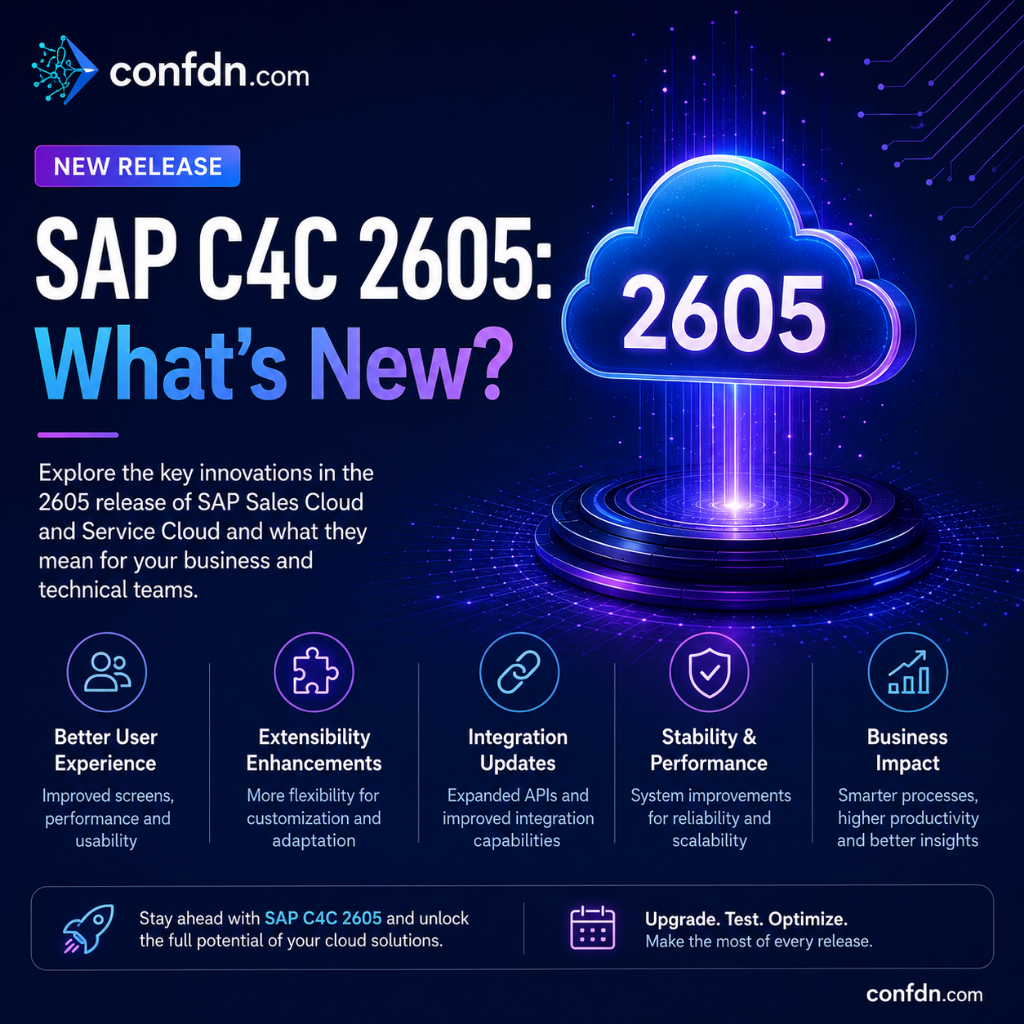
SAP has introduced a variety of enhancements and improvements with the 2605 release for Sales Cloud and Service Cloud. As with every release, this update is not only about adding new features but also about influencing how existing processes, integrations, and user experiences operate within the platform.
Many organizations review the release notes, perform the upgrade, and continue business as usual. However, experience shows that the true impact of a release often becomes visible only after users return to their daily operations. For this reason, every release should be evaluated not only from a functional perspective but also from an operational and technical standpoint.
In this article, we explore the key highlights of SAP C4C 2605 and the areas that project teams should pay attention to after the upgrade.
The Main Focus of the 2605 Release
Looking at the overall direction of the 2605 release, SAP appears to be focusing on four major areas:
- User Experience
- Integration Capabilities
- Extensibility
- System Performance
The improvements introduced in these areas have the potential to impact both business users and technical teams.
SAP's long-term cloud strategy continues to emphasize simplified user experiences, stronger integrations, and more reliable upgrade processes. The 2605 release aligns closely with these objectives.
Changes Affecting Sales Teams
For organizations using Sales Cloud, Lead, Opportunity, and Account processes remain at the center of daily operations.
The 2605 release introduces enhancements that can improve productivity in areas such as:
- Faster screen navigation
- Improved data loading performance
- Better usability
- Streamlined daily workflows
For organizations handling thousands of customer interactions, even small performance gains can translate into significant productivity improvements over time.
Teams working extensively with Opportunities, Accounts, and Quotes are likely to notice the benefits of these user experience enhancements.
Impact on Service Operations
For Service Cloud users, Ticket Management and Agent Experience remain critical components of the platform.
The 2605 release includes several improvements designed to support service teams, including enhancements related to:
- Ticket processing
- Agent productivity
- Navigation experience
- Data access performance
Organizations handling high ticket volumes may particularly benefit from these optimizations.
Service efficiency is often closely tied to how quickly agents can access and update information. As a result, even minor usability improvements can have a measurable impact on operational performance.
Why Technical Teams Should Pay Attention
Technical consultants and integration specialists are often the first teams to become involved after a release upgrade.
While users may initially see a system that appears to function normally, many post-upgrade issues originate from technical components operating behind the scenes.
Special attention should be given to:
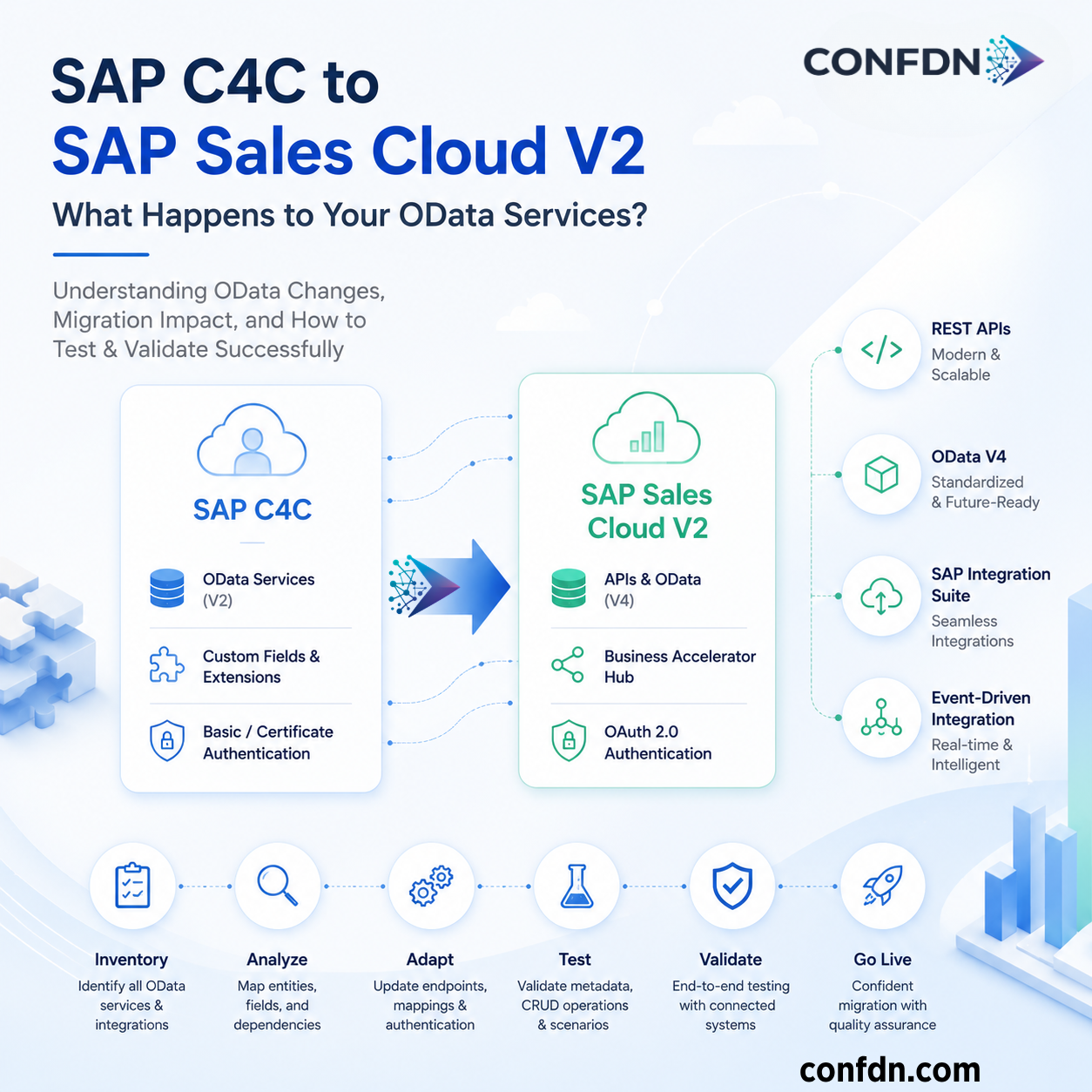
- OData services
- Communication Arrangements
- Workflow configurations
- Custom Business Objects
- ABSL developments
- Output and form generation
In many cases, problems only become visible days after the release when integrations, workflows, or automated processes begin to encounter unexpected scenarios.
Integration and API Considerations
Modern SAP C4C implementations rarely operate in isolation.
Most systems are integrated with platforms such as:
- SAP ERP
- SAP S/4HANA
- SAP Integration Suite
- SAP CPI
- CRM platforms
- Email services
- SMS providers
- Third-party business applications
Because of this, even small changes in API behavior can have significant consequences.
After the upgrade, organizations should validate:
✓ OData service accessibility
✓ Metadata responses
✓ Filter behavior
✓ Custom field availability
✓ Authentication mechanisms
✓ Communication Arrangement configurations
End-to-end integration testing is highly recommended, especially for business-critical interfaces.
Extensibility and Custom Development
Most SAP C4C implementations contain some level of customization.
These customizations often include:
- Custom Fields
- Adaptation projects
- Custom Business Objects
- Workflow rules
- SDK developments
- ABSL scripts
Following the 2605 release, all custom developments should be reviewed and validated.
Projects with extensive customization should place particular emphasis on regression testing.
A development may continue to function technically while still exhibiting different performance characteristics or framework behavior after an upgrade.
User Experience and Performance
System performance remains one of the most important factors affecting user satisfaction.
SAP continues to invest heavily in performance optimization and usability improvements across its cloud portfolio.
The 2605 release includes several enhancements designed to improve both responsiveness and overall user experience.
Recommended validation areas include:
- Dashboard performance
- Opportunity worklists
- Ticket management screens
- Mobile access scenarios
- Search functionality
- Large dataset processing
These tests become especially important in production environments where performance directly impacts business operations.
Areas That Should Be Tested After the Upgrade
After completing the upgrade, organizations should validate the following areas:
- Communication Arrangements
- OData services
- Workflow processes
- Approval mechanisms
- Adobe Forms
- Generate Summary outputs
- ERP integrations
- Third-party integrations
- Custom Business Objects
- ABSL developments
Performing these checks early helps identify potential issues before they affect end users.
CONFDN Insight
While the 2605 release does not introduce major architectural changes, it includes several important updates related to integrations, extensibility, and user experience.
Organizations that rely heavily on integrations or maintain significant custom developments should conduct structured regression testing after the upgrade.
A successful upgrade is not measured solely by whether the system starts successfully. True success is determined by whether integrations, workflows, outputs, and business processes continue to operate reliably after the release.
For this reason, both technical teams and business stakeholders should validate their critical processes following the SAP C4C 2605 upgrade.